
How the Humble Leafcutter Ant Exhibits Complex Programmed Behaviors
Ancient Israel’s wisest king exhorted, “Go to the ant, O sluggard; consider her ways and be wise. Without having any chief, officer, or ruler, she prepares her bread in summer and gathers her food in harvest” (Prov. 6:6–8). At its surface, the obvious message is a charge to the indolent to learn from the industry of ants.
Modern scientific scrutiny of these tiny creatures and the complex societies they fashion proffers lessons of significant metaphysical impact as well. To the methodological naturalist, these marvelous societies are the consequence of blind, undirected processes. Engineer Eric Cassell, however, argues that certain behaviors exhibited by ants are best explained as the product of an intelligent agent.
“Near-Miraculous” Prodigies
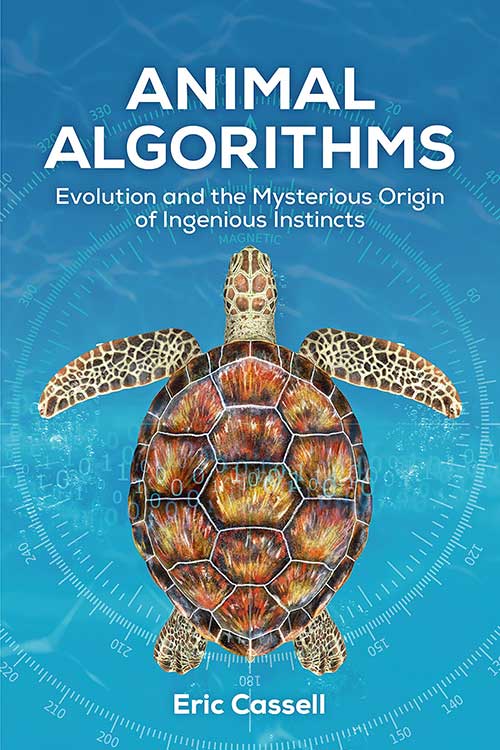
In his book Animal Algorithms: Evolution and the Mysterious Origin of Ingenious Instincts (2021), Cassell catalogs not just the brilliance of ants, but of many other animals as well. From the navigational accuracy of monarch butterflies, who often return to the same tree in Mexico as their predecessors did; to the impressive architecture of termites, who build nests with ventilation systems that not only cool the air but also remove carbon dioxide; to the surgical precision with which adult wasps inject into their honeybee hosts a toxin targeting a specific neural ganglion to cause paralysis (not death), genius reigns in the land of the seemingly “simple.”
Since the more familiar terms “innate” and “instinct” are understood differently among scientists, Cassell coins the term complex programmed behaviors (CPBs) to identify animal behaviors meeting five specific criteria. The behavior must be (1) complex, (2) goal-directed or purposeful, (3) programmed (involving an algorithm and the means to process information), (4) contingent, and (5) heritable. For Solomon’s exemplars, CPBs abound, as ants exhibit a highly specialized workforce that engages in impressive practices of agriculture, architecture, migration, and other divisions of labor. With brains no larger than sesame seeds, the genius of ants has scientists affirming that humans have much to learn from the tiny creatures.1
Myrmecologists Bert Hölldobler and Edward O. Wilson have dedicated their lives to ant research.2 In Journey to the Ants: A Story of Scientific Exploration, they detail the lives of ants, including the birth and death of colonies, agricultural practices, communications, divisions of labor, cooperative behaviors, territorial wars, and examples of conflict and dominance. Like many naturalists, they are particularly fond of leafcutter ants from the genus Atta, which are best known for their delicate and fastidious cultivation of “mushrooms.” The authors seem momentarily to suspend their naturalistic beliefs when they remark, “The leafcutters sustain their agriculture through a near-miraculous series of small, precise steps conducted in underground chambers.”
Indeed, leafcutters exhibit CPBs that are complex, precisely fine-tuned, and highly coordinated. With individual colonies on the perpetual brink of extinction from founding to establishment, there is little room for behavioral errors. The many behaviors necessary to sustain the colony manifest the kind of genius produced by purposefully developed algorithms.
Cassell defines an algorithm as “a set of well-defined rules for solving a problem in a finite number of steps” and establishes that algorithms are characteristically built by intelligent agents (typically mathematicians and programmers).
Foundress Farmer
In leafcutter land, impressive algorithms abound, starting with those informing the CPBs of a founding queen in establishing her nascent mushroom garden and emergent labor force. When a winged leafcutter virgin queen leaves her natal nest to establish a new one, her first task is to lift her nutrient-rich body in flight to meet males. In this one-off mating event, she will collect as many as two hundred million sperm from up to five males, and store all the sperm in a specialized sperm storage organ called the spermatheca.3 There the sperm cells will remain inactive until she judiciously redeems them, one by one, for the purpose of fertilizing her eggs.
Following mating, she descends to the ground and amputates her wings, effectively killing her chances for future flight. After digging a vertical shaft about thirty centimeters down, she builds a nursery to house both the eggs she will lay and a nascent crop of fungi. Remarkably, the queen’s starter fungus will have come from her natal nest. Prior to her departure, she collected a fragment of fungal hyphae and stored it in a specialized (infrabuccal) pocket in her mouth. Only after having mated and excavated the nursery chamber does she spit the fungal pellet out and establish her new garden.4
With her garden started, the young queen first lays three to six eggs, keeping them separated from the tiny fungal mass. By the end of the second week, with the fungal mass ten times its original size, and herself having accumulated more eggs, she brings the two together. Until adult workers emerge (forty to sixty days after the first eggs were laid), the queen alone tends the garden and brood. Throughout this process, algorithms drive her many CPBs like clockwork, one of which impels the queen to fertilize the fungal mass by tearing off a small fragment, bending her abdomen forward between her legs, touching the fragment to the tip of her abdomen (impregnating it with her own excrement), and returning the fragment to the garden.
At this stage of nest founding, the young queen is subsisting only on the energy of her own reserves, along with the nutrients provided by the breakdown of her now-useless wing muscles. The algorithms informing CPBs at this point operate within very tight constraints, as the queen finds herself in a race between starving and creating her workforce.
Since leafcutter nests are most susceptible to perturbation when they are young, it is vital that she carry out adaptive CPBs in exacting sequence and with precision. Her proverbial “hats” change with each phase of colony building. First, she initiates the colony as a foundress—an expert entrepreneurial farmer. Then, as the colony grows, her occupations change, as do the algorithms governing her behavior. When specific growth goals are met, she exchanges one set of CPBs for another.
HR Manager
Leafcutter ants demonstrate a division of labor reminiscent of human societies. To carry out the complex functions of guarding the nest, collecting and transporting leaf litter, tending the garden, and caring for the young, they operate according to a caste system based on size. The size of ant workers ranges from the tiniest gardener to giant soldiers three hundred times more massive, with foragers and mulchers of various sizes in between.
Employing a workforce strategy that the most competent Fortune 500 HR department would envy, the queen staffs her colony with just the right workers at precisely the right times. Since the early colony is small and relatively inconspicuous, there is no need to expend scarce metabolic resources on security (large soldiers) or even on larger foragers. Thus, the first crop of adult workers consists of the smallest foragers and still smaller gardeners, who process the vegetation and tend the fungal garden. Hölldobler and Wilson remark , “As the colony prospers and its population grows, the size range of the worker expands to include larger and larger forms ” ; then, “when the population reaches about a hundred thousand, the first full-sized soldiers are added.”
With the clock ticking on her rapidly depleting energy resources, crucial behavioral algorithms drive the queen to create, in the words of Hölldobler and Wilson, a “perfectly balanced work force on her first try.” The only way she and the young colony will survive is if her emergent workforce includes a number of tiny fungus gardeners, a few foragers large enough to leave the nest to cut and retrieve leaves, and intermediate-sized workers to mulch the garden. If an errant algorithm causes her to generate a soldier prematurely, or even a larger-sized forager indiscriminately, energy resources needed for the more important smaller castes will be unavailable.
The queen also acts as the budget analyst, as she is tasked with carefully balancing out the growth and feeding of her workforce with the agricultural output of the fungal garden. For all the hats she must wear, heavy is the head that wears the crown, and complex are the algorithms driving these behaviors.
Master Gardeners
Fortunately for leafcutter colonies, fine-tuned CPBs are not the exclusive domain of royalty. A successful colony hinges on algorithms driving coordinated and cooperative behavior among all members of the colony, in accordance with the multivariate tasks each must complete, be they tasks away from the colony (leaf cutting, collecting, and transport) or inside (tending the fungal garden, or what is termed their cultivar).
Growing evidence is revealing the leafcutters’ sophisticated agricultural strategies. Of increasing interest have been the specialized hygienic behaviors termed grooming and weeding. Grooming involves straining out harmful microbes and spores (principally the fungal parasite Escovopsis) by pulling pieces of the growing cultivar through their mouth parts; weeding entails removing infected areas of the cultivar.5
The leafcutters collect the hazardous debris from grooming and weeding in the infrabuccal pockets in their mouths. When the pockets are full, they expel the compressed material as pellets and deposit them in waste dumps away from the garden. Interestingly, when researchers examined the contents of these pellets, they found viable antibiotics (actinomycetes), but also unviable garden cultivar or the parasitic Escovopsis. The researchers suggested that the infrabuccal pocket plays a role in exterminating the invasive species, appearing to “function as a specialized sterilization device, killing spores of the garden parasite Escovopsis.” Put differently, the pockets act as “a confined space that permits the ants to place parasitic material in quarantine, subjecting it to antibiotics produced by their mutualistic bacteria.”6
These hygienic practices provide yet another example of an algorithmic behavior working in concert with physiological and chemical structures. After examining the microbial ecology of the infrabuccal pellets and the means by which the leafcutters disposed of them, Ainslie Little and her research colleagues stated, “This combination of behaviors and microbial symbionts, which constitutes the fungus-growing ants’ parasite defence strategy, has undoubtedly allowed for their enduring success.” This behavior system, along with the others discussed, exemplifies what Cassell termed “functional coherence.”
Functional Coherence
To be functionally coherent, both function and form must work in concert. In the case of CPBs, an organism’s adaptive behaviors are dependent on its aligning algorithmic commands to its physiological structures in appropriate response to stimuli. In the case of cultivar hygiene, if the ant has only the structure (infrabuccal pocket) but lacks an algorithm to direct its operation (to groom and weed), the behavior is non-functional, potentially culminating in an evolutionary dead end.
Cassell points out that at a minimum, to generate or even adaptively modify an already existing CPB, evolutionary processes would have to simultaneously act on multiple elements of the phenotype involved in the control of the CPB. These elements include (1) physiology—to execute the behavior, (2) brain structure—or the operating system, (3) sensors for receiving environmental feedback, and (4) the brain algorithm—what we might think of as the application software. Cassell adds, “For both the behavior and physiological trait to be adaptive, both must be instantiated at the same time.” A random genetic change in any of these elements that is incompatible with any of the others risks crashing the entire CPB.
Finally, Cassell asks:
What detailed evolutionary pathways are being offered, either by Darwin or by any of the current advocates of neo-Darwinism, concerning any complex programmed behavior in the animal kingdom? Such explanations are virtually never forthcoming, probably because . . . the probability of evolution producing numerous multiple coordinated genetic changes is extremely remote.
The science lesson to be learned from ants, then, is this: behaviors associated with founding a nest, staffing a colony, and maintaining cultivar hygiene all have their analogs in human-designed (intelligent) systems. Moreover, our everyday experience of cause and effect tells us that algorithmic systems always trace their origin to an intelligent designer. Philosopher of science Stephen Meyer writes, “Like other scientific theories, intelligent design makes claims about the cause of past events, thus making it testable against our knowledge of cause and effect.” Understanding this, it is reasonable to conclude that the CPBs running certain animal behaviors trace their origin to an intelligent designer.
Finally, Dutch theologian Herman Bavinck remarked, “The entire world is a revelation of God, a mirror of his virtues and perfections; every creature is in his own way and according to his own measure an embodiment of a divine thought.”7 In light of this, we might all do well to follow Solomon’s wise charge to “observe the ant.” For within the ant’s Lilliputian world, we see reflected an incomprehensible intellect. Far from ordinary and far from random, the genius imparting perfect functional coherence to the ants possesses a brain trust far surpassing that of our best engineers.
Notes
1. Leah Ariniello, “Protecting Paradise: Fungus-farming Ants Ensure Crop Survival with Surprising Strategies and Partnerships,” Bioscience 49, no. 10 (October 1999), 761.
2. Myrmecologists are entomologists who specialize in the study of ants.
3. Boris Baer and Jacobus Boomsma, “Mating biology of the leaf-cutting ants Atta columbica and A. cephalotes,” Journal of Morphology 267, (2006), 1165 1171: https://pubmed.ncbi.nlm.nih.gov/16817214.
4. Zachary Phillips, Luke Reding, and Caroline Farrior, “The early life of a leaf-cutter ant colony constrains symbiont vertical transmission and favors horizontal transmission,” Ecology and Evolution, 11 (2021), 11718–11729: https://doi.org/10.1002/ece3.7900.
5. Sarah Worsley et al., “Symbiotic Partnerships and their Chemical Interactions in the Leafcutter Ants (Hymenoptera: Formicidae),” Myrmecological News 27 (August 2018), 59–74.
6. Ainslie Little et al., “Defending against parasites: fungus-growing ants combine specialized behaviors and microbial symbionts to protect their fungus gardens,” Biology Letters (September 2005): https://doi.org/10.1098/rsbl.2005.0371.
7. Herman Bavinck as cited by Anthony Hoekema in Created in God’s Image (Eerdmans, 1986), 12.
graduated summa cum laude from California State University, Fresno, with a BS in molecular biology and a minor in cognitive psychology. As an undergraduate, she conducted research in immunology, microbiology, behavioral and cognitive psychology, scanning tunneling microscopy and genetics - having published research in the Journal of Experimental Psychology, and projects in scanning tunneling microscopy. Having recently completed an M.Ed. from University of Cincinnati and a Certificate in Apologetics with the Talbot School of Theology at Biola University, Emily is currently an instructional designer/content developer for Moody Bible Institute and teaches organic chemistry and physics. As a former Darwinian evolutionist, Emily now regards the intelligent design arguments more credible than those proffered by Darwinists for explaining the origin of life.
Get Salvo in your inbox! This article originally appeared in Salvo, Issue #64, Spring 2023 Copyright © 2026 Salvo | www.salvomag.com https://salvomag.com/article/salvo64/ingenious-ants


