
Our Galaxy's Just-Right Consumption Habits

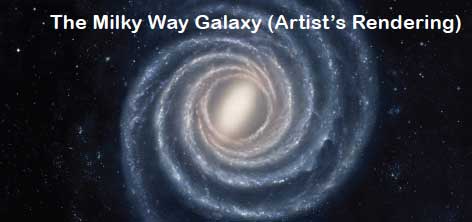
I'm not a fan of candy bars, but I do know that Milky Way bars (created 102 years ago by Frank Mars) were made to be eaten. By contrast, our Milky Way Galaxy, formed about 12 billion years ago, was made to eat. In at least one sense, the familiar adage, "You are what you eat," applies to both people and galaxies.
The various star populations within a galaxy tell astronomers what a galaxy's "diet" and "eating habits" have been throughout its multi-billion-year history. This information about the when,what, and how much our Milky Way Galaxy has consumed since its formation holds enormous significance for you and me. Our existence—or the possibility of it—depends to a large extent on our galaxy's "consumption" history over the billions of years since it first formed.
For one thing, a galaxy's "eating" history in its journey through space and time largely determines its shape and structure. In the case of the Milky Way, its consumption of stars, gas, and dust has led to the development of a stable spiral structure, the only structure appropriate for life, especially advanced life. Here's why: only in a spiral galaxy are the stars sufficiently far apart for a long enough time to allow for orbital stability within any planetary system it may contain and to protect such a system from exposure to deadly radiation.
Researchers have known for decades that spiral galaxies are relatively rare. Elliptical and irregular galaxies make up 94 percent of our universe's present-day galaxies. Thus, the pool of galactic candidates for life amounts to no more than 6 percent on the basis of shape and structure alone. Even this number may seem sizable on a cosmic scale, but only if these galaxies resemble the Milky Way in many or most other ways, including those characteristics affected by their consumption pattern. But they do not.
Four Exceptional Features
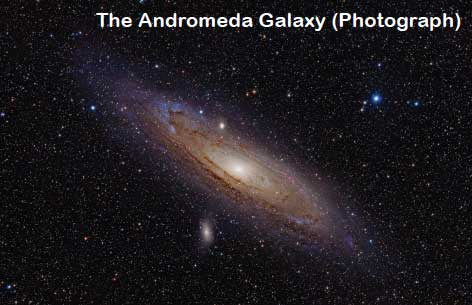
Exceptional features like the following four come into focus by comparison and contrast of the Milky Way with typical galaxies of a similar overall mass, such as our sister galaxy, Andromeda.
1. The ratio of the Milky Way's stellar mass (stars, planets, asteroids, comets) to its total mass is lower by half than that of Andromeda and other local spiral galaxies of its size.1
2. The angular momentum of the Milky Way's disk (a product of the disk radius and the disk rotational velocity) is only about 40 percent that of the Andromeda and other local spiral galaxies of similar mass.2
3. The Milky Way has a much smaller disk radius. Again, it amounts to roughly half that of Andromeda and other local spirals.3
4. The Milky Way differs most dramatically from other spiral galaxies of similar mass in the uniqueness of its halo. Unlike these other galaxies, the Milky Way possesses two clearly distinct halos, an inner and an outer, and the stars in both not only differ from each other but also from what's typical in the halos of other spiral galaxies.
Stars in the Milky Way's outer halo (between 17,000 and 100,000 light-years from the galactic center) have three times fewer heavy elements (elements heavier than helium) than do the stars in the halos of other spiral galaxies and even than the stars in its own inner halo.4 The stars with more heavy elements formed more recently and would have been gathered from other galaxies.
All four of these features combine to indicate that during the past 10 billion years, our galaxy has avoided major, yet generally typical, merger events with other large galaxies, mergers that would be devastating to the possibility of life.
A Closer Inside Look
Given that the elemental composition of the Milky Way's outer-halo stars matches the elemental composition of its thick-disk stars,5 astronomers conclude that the stars are similar in age. This similarity implies that the stellar halo and the thick disk formed from the same event and that it occurred early in the Milky Way's history.
Data from the APOGEE and Giaa DR2 stellar surveys reveal that the Milky Way experienced an unusually intense accretion event (a big gulp) more than 10 billion years ago.6 An in-depth analysis of these surveys shows that from 11 to 10 billion years ago, the Milky Way consumed either a medium-sized galaxy or a high-mass dwarf galaxy called the Gaia-Enceladus-Sausage (GES).7 This accretion event explains the observed properties of the Milky Way's stellar halo.8
A team of astronomers led by G. C. Myeong (University of Cambridge) found evidence for a second ancient accretion event (another gulp).9 Their findings show that just before the Milky Way accreted GES, it gobbled up a smaller galaxy they named the Sequoia Galaxy.
Through these ancient accretion events, the Milky Way Galaxy gained sufficient mass to maintain its structure despite gravitational interactions with other nearby galaxies later on. In fact, if its mass were any smaller now, gravitational interaction with the Large Magellanic Cloud, a nearby high-mass dwarf galaxy, would have so warped its spiral arm configuration as to make the Milky Way an unfit habitat for advanced life.10
Stars in the outer halo of the Milky Way are much more uniform in their elemental abundance than is typical, regardless of their distance from the galactic center.11 In the Andromeda Galaxy halo, for example, the stellar abundance of elements heavier than helium declines by eight times between 30,000 and 330,000 light-years' distance from the galactic center.12
Another striking difference shows up in the Milky Way's outer halo. By contrast with other local spiral galaxies, the number of stars per unit of volume drops off sharply beyond 90,000 light-years from the galactic core,13 and even more sharply beyond 160,000 light-years out.14
Knowing that stars in the outskirts of a galaxy are especially sensitive to the effects of galaxy mergers and that the outer regions of the halo are thus "particularly information-rich" with respect to past mergers,15 astronomers can say with certainty that the Milky Way Galaxy has been dynamically undisturbed by merger events for a very long time.
A Just-Right Galactic Diet
In other words, the Milky Way has maintained optimal eating habits to allow for our existence. It began with two large gulps of stellar and gaseous material. Since then, it has taken in sufficient streams of gas and an appropriate quantity of low-mass dwarf galaxies at a steady enough rate to sustain its spiral structure.
In other words, over the past 11 billion to 10 billion years, the Milky Way has merely nibbled, rather than gorged, ingesting no galaxies more massive than about 0.1 percent of its own total mass.16 Meanwhile, the observed features of halo stars in other spiral galaxies of approximately the same mass as the Milky Way show that they have experienced several major mergers during the same time period.17
This unique history explains, in large part, why today the Milky Way has spiral arms of rare and beautiful symmetry. It also explains why the Milky Way is a large spiral galaxy like no other we've yet discovered, a spiral galaxy uniquely fit to host advanced life.
Notes:
1. François Hammer et al., "The Milky Way, an Exceptionally Quiet Galaxy: Implications for the Formation of Spiral Galaxies," Astrophysical Journal 662, no. 1 (June 10, 2007), 322-334: doi:10.1086/516727.
2. Ibid.
3. Pauline Barmby et al., "Dusty Waves on a Starry Sea: The Mid-Infrared View of M31," Astrophysical Journal Letters 650, no. 1 (Oct. 10, 2006), L45-L49: doi:10.1086/508626; Paul J. McMillan, "Mass Models of the Milky Way," Monthly Notices of the Royal Astronomical Society 414, no. 3 (July 2011), 2446-2457: doi:10.1111/j.1365-2966.2011.18564.x; Hammer et al., ibid., note 1.
4. Hammer et al., ibid., note 1; Daniela Carollo et al., "Two Stellar Components in the Halo of the Milky Way," Nature 450 (Dec. 13, 2007), 1020-1025: doi:10.1038/nature06460.
5. L. I. Mashonkina et al., "Abundances of a-Process Elements in Thin-Disk, Thick-Disk, and Halo Stars of the Galaxy: Non-LTE Analysis," Astronomy Reports 63, no. 9 (September 2019), 726-738: doi:10.1134/S1063772919090063.
6. Ricardo P. Schiavon et al., "The building blocks of the Milky Way halo using APOGEE and Gaia or Is the Galaxy a typical galaxy?", Star Clusters: From the Milky Way to the Early Universe. Proceedings of the International Astronomical Union 351 (2020), 170-173: doi:10.1017/S1743921319007889.
7. Chris B. Brook et al., "Explaining the Chemical Trajectories of Accreted and In-Situ Halo Stars of the Milky Way," Monthly Notices of the Royal Astronomical Society (April 15, 2020), posted online ahead of publication: doi:10.1093/mnras/staa992.
8. Lydia M. Elias et al., "Cosmological Insights into the Assembly of the Radial and Compact Stellar Halo of the Milky Way," Monthly Notices of the Royal Astronomical Society (April 22, 2020), posted online ahead of publication: doi:10.1093/mnras/staa1090.
9. G. C. Myeong et al., "Evidence for Two Early Accretion Events That Built the Milky Way Stellar Halo," Monthly Notices of the Royal Astronomical Society 488, no. 1 (September 2019), 1235-1247: doi:10.1093/mnras/stz1730.
10. Chervin F. P. Laporte et al., "Response of the Milky Way's Disc to the Large Magellanic Cloud in a First Infall Scenario," Monthly Notices of the Royal Astronomical Society 473, no. 1 (January 2018), 1218-1230: doi:10.1093/mnras/stx2146; Kenjo Bekki, "The Influences of the Magellanic Clouds on the Galaxy: Pole Shift, Warp, and Star Formation History," Monthly Notices of the Royal Astronomical Society 422, no. 3 (May 2012), 1957-1574: doi:10.1111/j.1365-2966.2012.20621.x.
11. Charlie Conroy et al., "Resolving the Metallicity Distribution of the Stellar Halo with the H3 Survey," Astrophysical Journal 887, no. 2 (Dec. 20, 2019): https://arxiv.org/abs/1909.02007; Branimir Sesar, Mario Jurić, and Željko Ivezić, "The Shape and Profile of the Milky Way Halo as Seen by the Canada-France-Hawaii Telescope Legacy Survey," Astrophysical Journal 731, no. 1 (April 10, 2011): doi:10.1088/0004-637X/731/1/4.
12. Karoline M. Gilbert et al., "Global Properties of M31's Stellar Halo from the SPLASH Survey. II. Metallicity Profile," Astrophysical Journal 796, no. 2 (Dec. 1, 2014): doi:10.1088/0004-637X/796/2/76; Rodrigo A. Ibata et al., "The Large-Scale Structure of the Halo of the Andromeda Galaxy. I. Global Stellar Density, Morphology, and Metallicity Properties," Astrophysical Journal 780, no. 2 (Jan. 10, 2014): doi:10.1088/0004-637X/780/2/128.
13. Sesar, Jurić, and Ivezić, ibid., note 11.
14. A. J. Deason et al., "Touching the Void: A Striking Drop in Stellar Halo Density beyond 50 kpc," Astrophysical Journal 787, no. 1 (May 20, 2014): doi:10.1088/0004-637X/787/1/30.
15. Andreea S. Font et al., "The ARTEMIS Simulations: Stellar Haloes of Milky Way-Mass Galaxies," accepted for publication by Monthly Notices of the Royal Astronomical Society (2020), preprint: arXiv:2004.01914v1.
16. Andreea S. Font et al., "Dynamics and Stellar Content of the Giant Southern Stream in M31. II. Interpretation," Astronomical Journal 131, no. 3 (March 2006), 1436-1444: doi:10.1086/499564; Andreea S. Font et al., "Phase-Space Distributions of Chemical Abundances in Milky Way-Type Galaxy Halos," Astrophysical Journal 646, no. 2 (Aug. 1, 2006), 886-898: doi:10.1086/505131.
17. Christopher J. Conselice et al., "A Direct Measurement of Major Galaxy Mergers at z ≤ 3," Astronomical Journal 126, no. 3 (September 2003), 1183-1207: doi:10.1086/377318; David L. Block et al., "An Almost Head-On Collision as the Origin of Two Off-Centre Rings in the Andromeda Galaxy," Nature 443, no. 7113 (October 2006), 832-834: doi:10.1038/nature05184; Gilbert et al., ibid., note 12.
PhD, is an astrophysicist and the founder and president of the science-faith think tank Reasons to Believe (RTB).
Get Salvo in your inbox! This article originally appeared in Salvo, Issue #55, Winter 2020 Copyright © 2026 Salvo | www.salvomag.com https://salvomag.com/article/salvo55/the-milky-way-diet


