
The Wurmbrand Story & Its Lessons for Today
In 1961, when he was 22 years old, Mihai Wurmbrand stood on a sidewalk in Bucharest, Romania, gazing in a shop window. As he did, he felt someone step up beside him to do the same thing. It was a woman, and she was standing uncomfortably close. He turned his head toward her, but she stopped him.
“Mihai,” she said, “don’t look at me. I have something to tell you. You are the person I most admired in my life for the stand you took when you were a child.”
With that, she turned and walked away. He never saw her again. But he did recognize her face and her voice. In a July 2016 interview with Nasul TV in Detroit, Michigan, Mihai shared the story behind the brief encounter:
When I was 11 in Romania, the communists introduced us to becoming young pioneers. You got the red tie, and its advantage was that children had some rights to go to game clubs. It so happened that I was . . . the best in the class and . . . I was offered to be the first pioneer in [an upcoming] big school gathering. . . . I went home to my mother and proudly told her how I was going to be made a pioneer the following day. [My mother] told me, “Tomorrow, you are going to stand up and when they give you the red tie, you will tell them you refuse to wear the tie of a regime that holds [your] father in prison.” And there was no discussion. I knew if I did not do what she had told me to do, she would not have me back in the house. No compromise.1
The next day in school, Mihai did exactly as his mother, Sabina Wurmbrand, had instructed him. He even added a few defiant comments of his own. He told the school staff that the atheistic, communist regime that was holding his Christian minister father in prison was doing so to its own unconscionable shame. Mihai refused his red tie and became an instant pariah.
The school’s headmistress, an avowed communist, called him into her office to reprimand him for his defiant attitude. She condemned his actions but told him she would stop short of expelling him from school.
It was that headmistress who approached Mihai eleven years later on the sidewalk. Fearful of the repercussions that could result if anyone observed her communicating with a member of a dissident family like Mihai’s, she spoke to him without making eye contact. She had admired his boldness since he was a schoolboy, but she did so in silence.
In silence.
The headmistress’s cautionary quiet paints a horrifying picture of the creeping tentacles of state authoritarianism and how it can infect and poison society. Coerced into accepting the Spirit of the Age to preserve her status and earn a living, she chose to bury her admiration for a courageous little boy. Her reward was an existential comfort she could only enjoy inside her own psychological prison.
Today, Mihai is 84 years old. He has Americanized his name to Michael and lives near his son in Los Angeles, California. Still an outspoken enemy of atheistic communism, Michael is the last living direct connection to the horrors of the totalitarianism his family experienced. It’s a story as compelling and inspiring as any Cold War political thriller. But the Wurmbrands’ story is more than just an object lesson in political defiance. At its heart, it’s a tutorial about the power of the gospel.
Defying the Spirit of the Age
Michael’s father, Richard, was the youngest of four sons born in 1909 to a Jewish family in Bucharest, Romania. He studied Marxism as a young man. But by age 29, Richard had not only converted to Christianity, but was convinced that his new faith was incompatible with the atheistic communist system he’d watched percolating around him. By 1945, he’d had enough.
That year, the Soviet regime formed “The Congress of all Denominations,” a church-state cooperative the communists had assembled to monitor and control the church. Wurmbrand watched in horror as many of his fellow pastors pledged their allegiance to, and cooperation with, the government. At one crucial meeting, he was the only minister who dared to stand up and defy the regime’s agenda. While most of his contemporaries either parroted the propaganda of their Soviet commissars or remained silent, Richard started an underground church. As a result, on February 29, 1948, he was abducted off a street in Bucharest while on his way to church and thrown in prison.
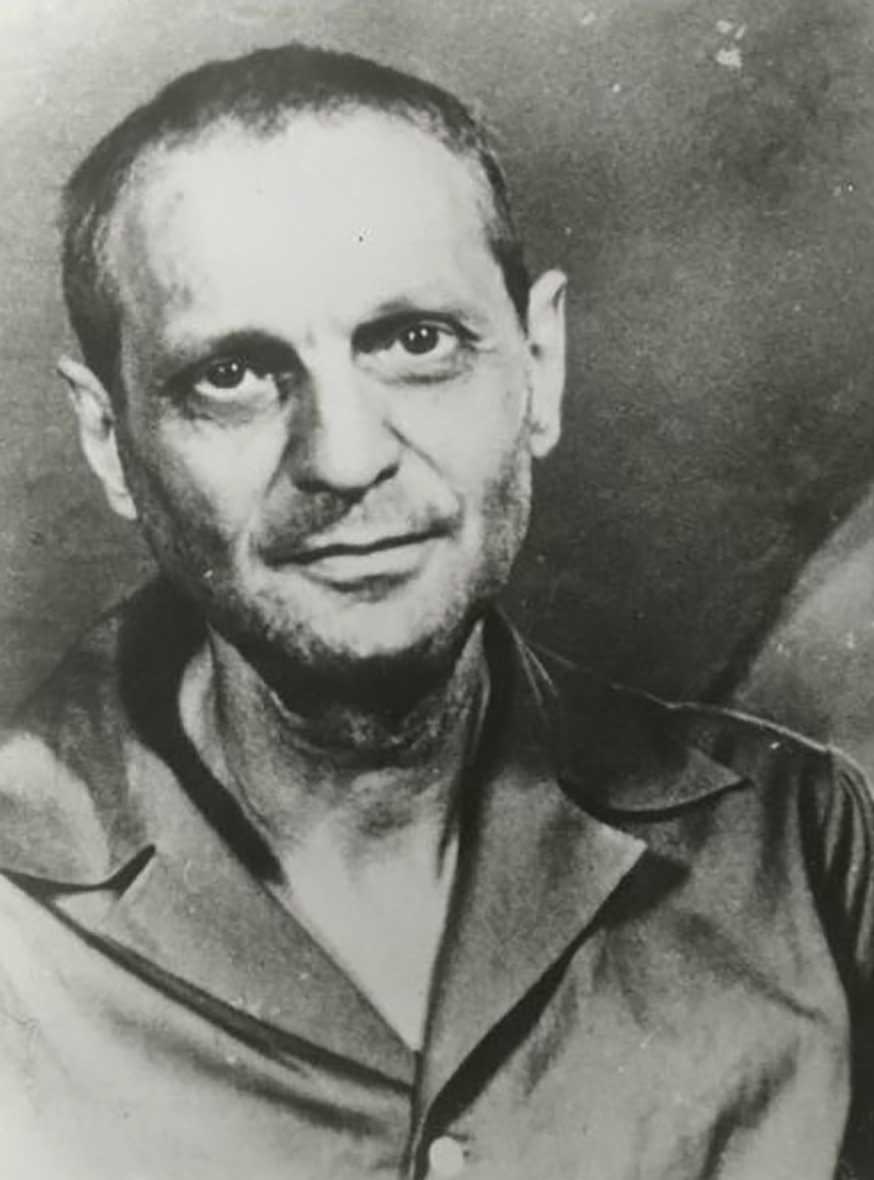
A short time later, his wife, Sabina, was also arrested. She was imprisoned for three years. Their son Michael and a friend were left in the care of a 28-year-old woman who voluntarily looked after them when doing so was a dangerous proposition. She was later arrested for the crime of caring for prisoners’ children and sentenced to six years in a communist prison.2 Michael is forever indebted to her for the kindness she showed him.
Richard was released after eight and a half years. But he couldn’t help himself. He went straight back to proclaiming the truth of Christianity and the travesty of totalitarianism. He was rearrested as a result. This time, he was sentenced to 25 years in prison. During that stint, agents of the state posing as released prisoners falsely informed Sabina that Richard was dead. They told her they had attended his funeral, but Sabina refused to believe them because she had seen her husband alive in a vision.3
It turned out her vision was accurate. Richard was still very much alive.
In the end, he spent 14 years as a political prisoner, three of them in solitary confinement. He was finally granted clemency in 1964. During his time in prison, he repeatedly shared the gospel with prison guards. Some would listen in secret. But most demanded silence from their captives, threatening them with torture if they broke it.
For those, Richard would stop talking out loud. But he was never silent. Instead, he would tap gently on his cell wall, delivering messages to his neighbors by Morse code. One way or another, he composed and delivered a sermon to his fellow prisoners every night. In his spare time, Richard memorized the names of more than 350 prisoners whose identities he was later able to verify for families still agonizing about their fate.4
Imprisoned but Not Overcome
When I began digging into the Wurmbrands’ story, I was looking to draw parallels between their firsthand experiences with Soviet-style hard totalitarianism and the creeping “soft totalitarianism” that Rod Dreher so cogently exposes in his best-selling book, Live Not by Lies. The connections between the two are obvious. History repeats itself.
But to emphasize those alone would be to miss the point. If the Wurmbrand story teaches us anything, it is that we should not fear the evil that human beings might perpetrate on one another. Instead, we should prepare ourselves to spring into action when they do.
Though he detests the actions of the communist tyrants who imprisoned his parents, Michael Wurmbrand does not spend much time waxing philosophically or politically about their “devilish atheism.” Instead, he has dedicated his life to saving and serving those who experience the same kind of circumstances he did as a young boy. As director of the ministry, “Help for Refugees,” Michael raises funds and provides for the elderly and for the displaced, disadvantaged, and orphaned children of the world. Today that translates into mustering tangible support for the refugees of the war in Ukraine.
Until his death in 2001, Richard Wurmbrand lived with a similar purpose, which he traced back to his first arrest in 1948. He considered the date he was abducted to have been a blessing in disguise. His reasoning? He counted 366 verses in the Bible exhorting God’s people, “Do not be afraid.” In his mind, that meant that there was a Bible verse for every day of the year—including leap years—encouraging him to carry on. He saw his February 29th abduction as God’s subtle way of reminding him of that fact.
Despite all their experiences and suffering, the Wurmbrands’ message is rarely focused on themselves. Richard’s proudest accomplishment was that, after 20 years of communist dictatorship, the number of professing Christians in Romania had grown by more than 300 percent. Those included some of the guards who had held him in prison and had therefore been exposed to the gospel he refused to stop preaching. It even included Gheorghe Gheorghiu-Dej, the dictatorial General Secretary of the Romanian Communist Party from 1944 to 1965. Gheorghiu-Dej confessed Christ shortly before his death in his final year in power. He had been directly responsible for the imprisonment and torture of thousands like Richard Wurmbrand.
“We were prisoners,” said Richard, “yet we triumphed.”5
Contending for the Gospel against the Spirit of the Age
Listening to the Wurmbrands’ story, I am struck by the recurring appearance of “silence” in the narrative. The silence displayed by a grade-school headmistress who cowered behind her own safety and comfort, shamed by the courage of a little boy. The silence of pastors who bent the knee to earthly masters. The silence demanded by tyrannical prison guards.
It would be ludicrous to equate the imprisonment and torture suffered by those inside a Soviet police state with the inconvenience of suppression by the likes of the social media thought police in our time. But we cannot ignore the fact that they share a common root.
Silence is the language of acquiescence to tyranny.
The Spirit of the Age demands silence because it despises the truth. And while the consequences of speaking that truth may frighten us, we must never allow them to intimidate us into silence, especially if doing so means muzzling the gospel. Another important thing the Wurmbrands’ story teaches us is that the Truth demands our allegiance. Whether we are called to shout it from the mountaintops or to tap it quietly on a concrete wall, we are obliged to speak it, consequences be damned.
Ultimately, that is the lesson the Wurmbrand family saga brings to life. It can be summed up in the words of the only person Richard Wurmbrand ever hoped to please: “I have said these things to you, that in me you may have peace. In this world, you will have trouble. But take heart; I have overcome the world.”6
Notes
1. “An Interview with Michael Wurmbrand,” Nasul TV (July 2, 2016), available at richardwurmbrandfoundation.com.
2. Ibid.
3. “1967, First U.S. Video of Pastor Richard Wurmbrand,” available at richardwurmbrandfoundation.com/videos/RW-1967.mp4.
4. Mariana Ganea, “Famous Romanians: Three Knights of God,” Romania Insider (Jan. 16, 2014): https://bit.ly/3r1pksD.
5. Ibid., note 3.
6. John 16:33.
is a graduate of the U. S. Naval Academy (B. S., Aerospace Engineering) and Biola University (M.A., Christian Apologetics). Recently retired, his professional aviation career included 8 years in the U. S. Marine Corps flying the AV-8B Harrier attack jet and nearly 32 years as a commercial airline pilot. Bob blogs about Christianity and the culture at: True Horizon.
Get Salvo in your inbox! This article originally appeared in Salvo, Issue #64, Spring 2023 Copyright © 2026 Salvo | www.salvomag.com https://salvomag.com/article/salvo64/breaking-silence


