
Delayed Smart Devices Shelter Young Minds
Twenty-year-old pop star Billie Eilish recently made headlines when she told Howard Stern that porn "destroyed my brain."
Speaking to the shock jock last December, Eilish said, "I think porn is a disgrace. I used to watch a lot of porn, to be honest. I started watching porn when I was, like, 11."1 She added that the experience gave her nightmares, but nevertheless she found herself unable to pull away and now feels "devastated" at having been exposed to so much porn. Eilish said that when she later became sexually active, she found herself "not saying no to things that were not good."
Ravaging a Generation
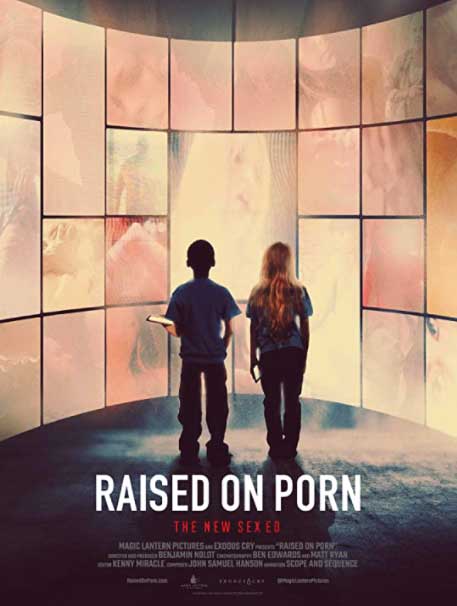
Eilish is one example of an entire generation of children literally raised on pornography. The internet changed a lot of things regarding how a culture handles explicit imagery, but one might argue that the real game-changer was the advent of the iPhone in 2007. Suddenly, millions of children (the average age of first smartphone ownership hovers around 10–11) now had devices that could and did connect them to literally billions of images and videos depicting the most violent, sadistic, and degrading forms of pornography imaginable. Today, according to the 2021 documentary Raised on Porn, the majority of children have been exposed to pornography by the age of 13, and some by as young as 7.2 Most of the time, the exposure was accidental and unwanted.
Although pornography isn't good for anyone, it is particularly damaging to children, literally changing the structure of their brains. In adults, the frontal lobe of the brain is responsible for reasoning and higher mental functioning. It is the frontal lobe that weighs the pleasure responses the brain receives against things like moral judgment, natural consequences, and so forth. In children, and even in adolescents, the frontal lobe isn't fully developed. Children's brains are flooded with dopamine when they view porn, and they have literally no ability to turn away from imagery that they find exciting or enticing.
The results of repeated exposure to violent pornography shouldn't be surprising: they include increases in teen dating violence,4 domestic abuse,5 and marital rape,6 and an increase in the likelihood that other kinds of sexual offenses will be committed.7 Children and adolescents, particularly boys, use porn as their model of what sex should be like, and so they pressure their partners to perform acts they first saw in porn videos—acts that are physically, emotionally, and mentally injurious, to women especially.
None of the evils of porn are new, of course. What is new is the delivery mechanism, and the startlingly young age at which most children first view pornography. Children are now at a much, much greater risk of developing an addiction to porn, even when they can't fully understand what they're seeing. And they are that much more at risk of later on becoming both perpetrators and victims of a multitude of sexual offences, illnesses, heartbreaks, and crimes.
Ameliorating the Risks
So what is one to do? Wring your hands, and lock your kids' doors until they're 25 and ready to engage the world with a fully developed brain? Or throw your hands up in the air, cry that "boys will be boys," and turn a blind eye to the damage being done en masse to an entire generation of young people?
There are a few common-sense solutions to consider that may at least ameliorate the risk to children.
First, no child needs a smartphone at age 10. If children need a way to contact their parents, they can use a landline or some kind of "safe" phone solution (disabled from the internet), such as Gabb wireless.
Second, children in this generation are probably going to need to have earlier discussions with their parents about sex and porn than did the children of previous generations. If a ten-year-old boy has friends who own smartphones, he's probably going to see some nasty images sooner than anyone would like. Books like Good Pictures, Bad Pictures (by Kristen A. Jenson and Debbie Fox) may help in such discussions.
Third, the United States needs meaningful age-verification laws with respect to porn access. Better yet would be to make all porn illegal, but since that is unlikely to occur, the least we can do is to demand that a photo ID or something beyond "click here if you are over 21" be required to access porn.
And fourth, kids need real activities with real adults and real friends in real life. They need to get away from screens of all kinds, except for very limited periods. They need to play outside, go to basketball practice, ride their bikes, learn skills like cooking or home maintenance, study art or take music lessons, and in other ways engage in real life. Nothing, perhaps, will provide a greater antidote to the unreality of pornography and the distorted views of life and relationships it depicts than the formation of real relationships with real people.
And let us hope that others like Billie Eilish, who have been exposed all too young to the horrors of porn use, continue to speak openly about the scars they now bear.
Notes
1. "Billie Eilish says watching porn from age 11 'really destroyed my brain,'" CNN (Dec. 16, 2021): cnn.com/2021/12/15/entertainment/billie-eilish-porn-scli-intl/index.html.
2. Raised on Porn (Magic Lantern Pictures, 2021): https://raisedonporn.com.
3. Ana J. Bridges, Robert Wosnitzer, Erica Scharrer, Chyng Sun, and Rachael Liberman, "Aggression and Sexual Behavior in Best-Selling Pornography Videos: A Content Analysis Update," Violence Against Women, vol. 16, no. 10 (2010), 1065–1085.
4. Whitney L. Rostad et al., "The Association Between Exposure to Violent Pornography and Teen Dating Violence in Grade 10 High School Students," Archives of Sexual Behavior 48.7 (October 2019), 2134–2147: ncbi.nlm.nih.gov/pmc/articles/PMC6751001.
5. Janet Hinson Shope, "When Words Are Not Enough: The Search for the Effect of Pornography on Abused Women," Violence Against Women, vol. 10, no. 1 (2004), 56–72.
6. R. K. Bergen, "The Reality of Wife Rape: Women's Experiences of Sexual Violence in Marriage," in Issues in Intimate Violence, R. K. Bergen, ed. (Sage Publications, Inc., 1998), 237–250.
7. Raised on Porn, note 2.
is the managing editor of The Natural Family, the quarterly publication of the International Organization for the Family.
Get Salvo in your inbox! This article originally appeared in Salvo, Issue #60, Spring 2022 Copyright © 2026 Salvo | www.salvomag.com https://salvomag.com/article/salvo60/iporn-interrupt


